Ivan Yakovlevitch
The NoseIvan Yakovlevitch is a barber in St Petersburg whose discovery of Platon Kovaloff’s nose sets the central absurdity of the story in motion. His part in the episode runs from startled recognition and a failed attempt to dispose of the nose to arrest and, finally, an uneasy return to his ordinary work. Through him, the extraordinary event enters everyday life not as a mystery investigated from a distance, but as a dangerous practical problem involving a household, the street, the police, and a customer’s face.
Identity and Background
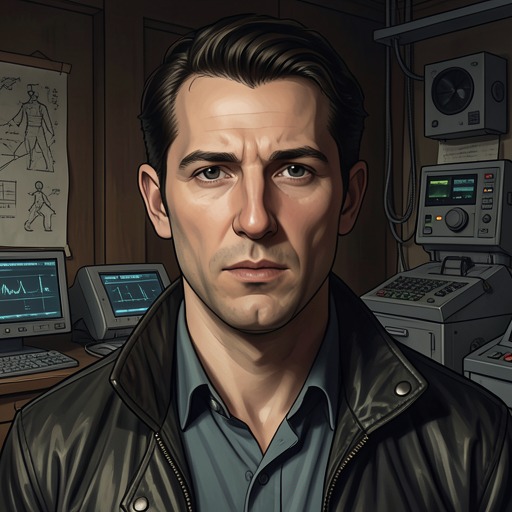
On the morning of 25 March, Ivan lives on Ascension Avenue with his wife, Prasskovna Ossipovna. His sign depicts a gentleman with one cheek soaped, but gives no family name; its only readable words advertise blood-letting. The sign makes his work legible while leaving the barber himself, in the narrator’s account, without a surname. His identity is instead established by his trade and his connections to customers.
The narrator describes him as an estimable man in some respects, then qualifies that portrait by calling him a terrible drunkard, like an honest Russian tradesman. Although he shaves other people every day, he leaves his own face unshaved. His coat, which he wears without an overcoat, has faded from black to brownish yellow; its collar is shiny, and the buttons are gone, leaving only their threads. These details place him in a visibly worn, modest domestic and occupational world, sharply unlike the polished uniforms and titles that dominate Kovaloff’s concerns.
Discovery and Attempt to Dispose of the Nose
That morning Ivan wakes early to the smell of fresh bread. He asks Prasskovna Ossipovna for a loaf with onions rather than coffee. While eating, he finds a nose inside the bread. His first response is astonishment; he examines it and recognizes it as the nose of someone he knows. Prasskovna’s alarm quickly becomes anger: she blames him, threatens to report him to the police, and refuses to let the severed nose remain in the room. Ivan recognizes that it must belong to Kovaloff, whom he shaves every Sunday and Wednesday and knows as a member of the Municipal Committee.
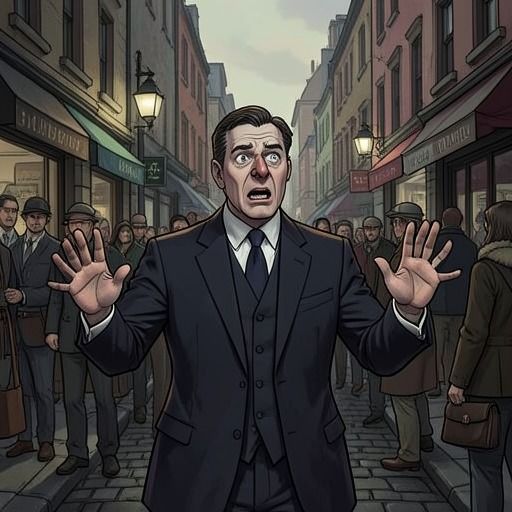
Pressed by his wife to remove it, Ivan wraps the nose in cloth and goes out intending to abandon it somewhere. An acquaintance stops him with questions, preventing him from acting. When he eventually lets the bundle fall, a sentry notices and orders him to pick it up; Ivan has to put it back in his pocket. As the streets fill and shops open, he becomes increasingly desperate. He decides to go to the Isaac Bridge, hoping he can throw the nose into the Neva. The attempt is not simply a private evasion: the crowded street repeatedly interrupts him, and even the object he tries to discard draws public attention.
Arrest and Connection to Kovaloff
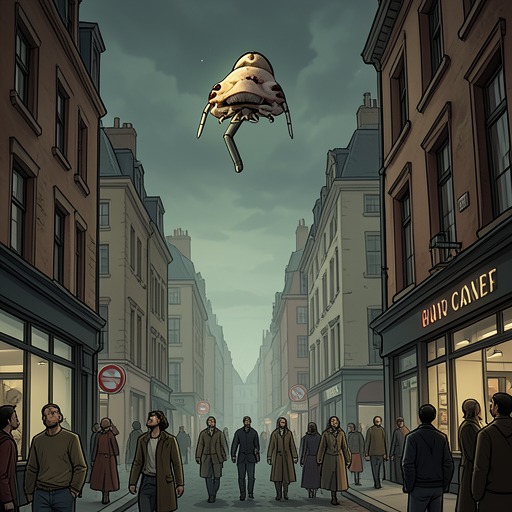
The police commissary later reports that the nose has been arrested while trying to get into a carriage bound for Riga. It had a passport made out in the name of an official, and the commissary says he first mistook it for a gentleman before recognizing what it was. He identifies Ivan, a barber living on Ascension Avenue, as the principal culprit and says Ivan is locked up. The commissary adds that he had already suspected the barber of drunkenness and theft, citing a recent theft of buttons from a shop. This account supplies an official explanation for Ivan’s detention, but it does not explain how Kovaloff’s nose came to live independently or how it acquired the appearance and standing of a high-ranking official.
Ivan’s relationship to Kovaloff is a routine professional one, but the nose makes that ordinary connection look like a possible crime. Kovaloff wants to recover what he regards as an essential part of himself; Ivan, faced with the object at home, first tries to hide it and then to remove it from his possession. The contrast between their positions is pronounced. Kovaloff calls himself Major, pursues a government appointment, and worries about appearing before influential acquaintances, while Ivan is identified by his trade, his worn clothes, and the suspicions attached to him. When Kovaloff seeks an advertisement, he is anxious that his lady friends, including Madame Podtotchina, should not hear of his loss; the nose’s public career therefore threatens the social standing that Ivan’s ordinary work serves.
Return to Work and Narrative Role
After the nose is returned to Kovaloff, it will not reattach. A doctor examines the vacant place and concludes that replacement cannot be done, advising Kovaloff to let nature take its course. The nose eventually returns to Kovaloff’s face by unexplained means. When Ivan appears again, Kovaloff first asks whether his hands are clean. Ivan answers that they are. He approaches the nose with the familiar professional gesture of taking hold of it at the extremity, but Kovaloff warns him to be careful. Ivan lets his arm fall, embarrassed, and completes the shave by bracing his wrinkled thumb against Kovaloff’s lower jaw and cheek instead of using the nose as his usual point of support.
The scene closes Ivan’s immediate involvement without clarifying his earlier actions or the cause of the nose’s disappearance. Once the nose is back, the barber resumes his trade, adapting its technique to the very feature whose absence had turned an ordinary shave into an impossible task. His trajectory thus binds the fantastic plot to routine labor: he neither explains nor resolves the miracle, but his discovery, attempted disposal, arrest, and return to work mark its passage through domestic space, public streets, and official authority. The gap between a nose’s apparent rank and the barber’s precarious standing also helps expose the story’s unstable social order, in which titles command attention even when the person—or body part—behind them defies ordinary sense.